A robust trading system is not a random set of signals — it combines strategy, risk management, instruments, and discipline. Below is a structured overview of the key building blocks of a personal trading architecture.
Trading vs investing — different goals
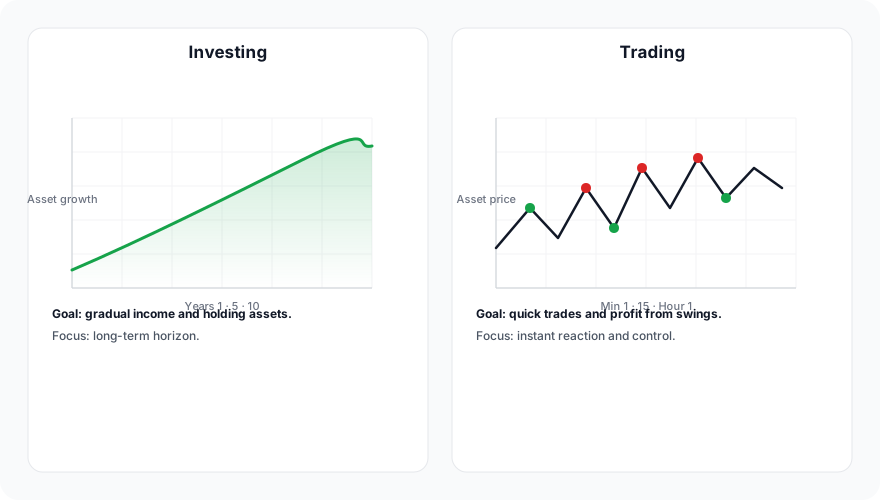
Trading is the active extraction of profit from volatility, not passive waiting for asset growth.
Investing
- Goal: gradual income accumulation and holding assets.
- Focus: long-term horizon — years and decades.
- Mechanics: portfolio growth, dividends, coupons.
Trading
- Goal: quick trades and profit from market swings — up and down.
- Focus: instant reaction and active position control.
- Horizon: from seconds to weeks, occasionally months.
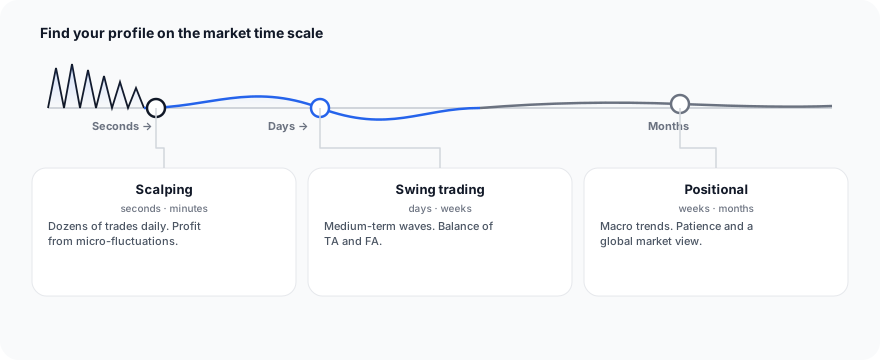
Define your profile on the time scale
Your trading style depends on how long you hold positions and how many hours per day you dedicate to the market.
Scalping (seconds / minutes)
Dozens of trades per day. Profit from micro-fluctuations. Requires maximum concentration and instant reaction.
Swing trading (days / weeks)
Holding positions to capture medium-term waves. Balance of technical and fundamental analysis — fewer trades, more preparation time.
Positional trading (weeks / months)
Working with macroeconomic trends. Requires patience and deep understanding of global markets.
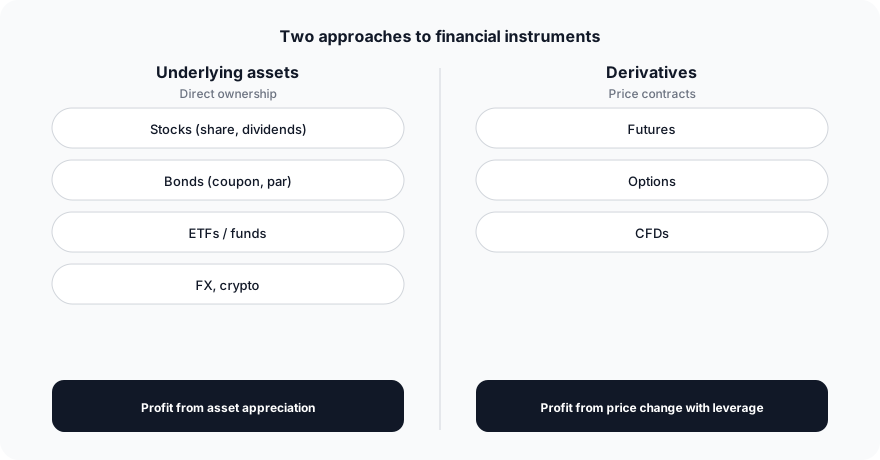
Two approaches to financial instruments
Underlying assets — direct ownership
- Stocks — company share, dividends.
- Bonds — coupon income, return of par value.
- ETFs and funds — diversified basket in one instrument.
- Currency, crypto — speculation or hedging.
Mechanics: profit from rising (or falling, when shorting) asset value.
Derivatives — price contracts
- Futures — obligation to buy or sell in the future.
- Options — right, but not obligation, to transact.
- CFDs — contract for difference without owning the underlying asset.
Mechanics: profit from price changes, including on the downside, often with leverage.
Leverage: symmetric risk
1:10 leverage means a €1,000 deposit opens a €10,000 position. With a 10% market move:
- Market +10%: €1,000 profit — doubling the deposit.
- Market −10%: €1,000 loss — full loss of deposit.
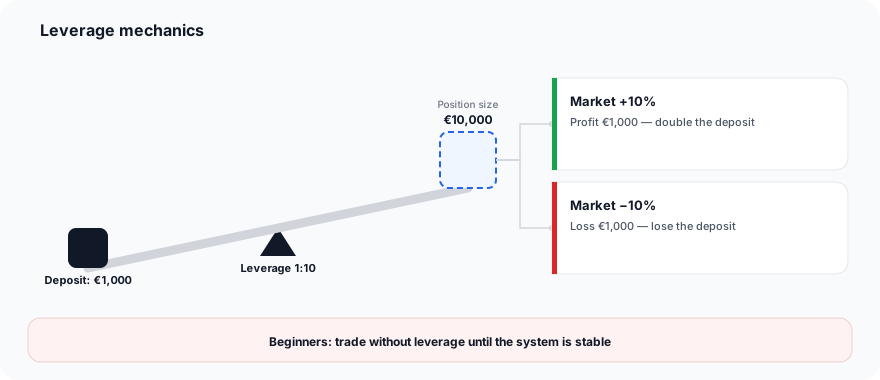
Important
Beginners are advised to trade without leverage until a stable trading system and risk rules are in place.
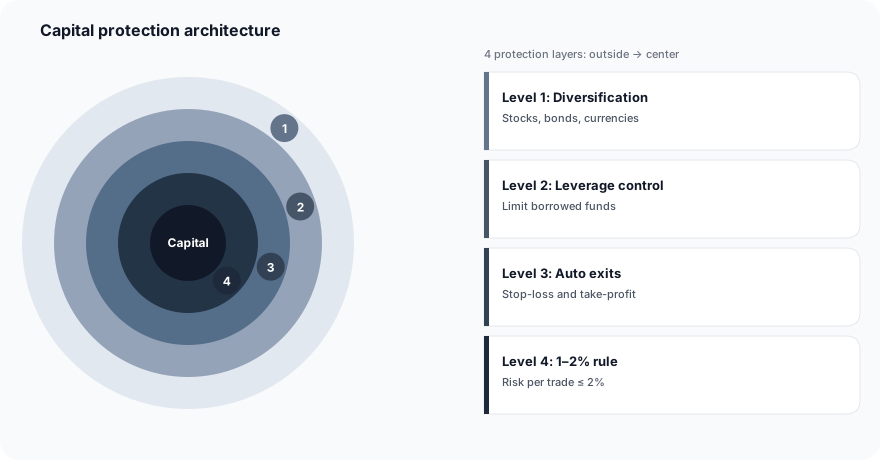
Capital protection architecture: four levels
- Diversification (outer layer). Spread funds across asset classes: stocks, bonds, currencies.
- Leverage control. Strict limits on borrowed funds — no more than your strategy allows.
- Automated exits. Mandatory stop-loss (cap losses) and take-profit (lock in gains) before entering a trade.
- 1–2% rule (core). Maximum risk per trade does not exceed 1–2% of the deposit.
Systematic approach vs emotional traps
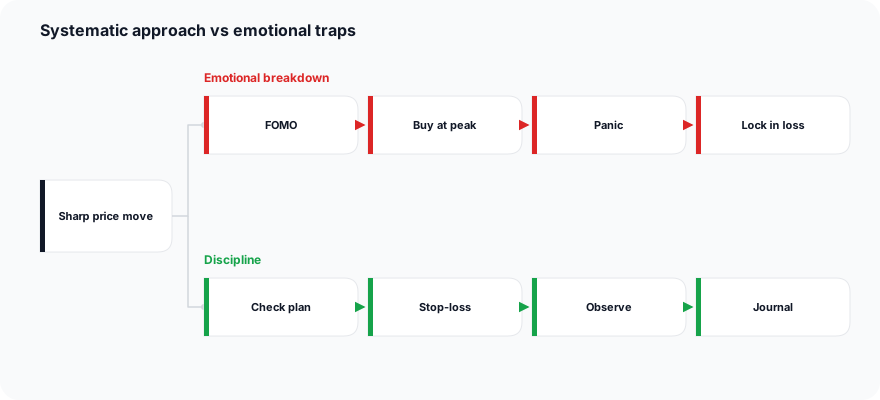
A sharp price move is a typical trigger for two opposite scenarios.
Emotional breakdown (loss loop)
- FOMO — fear of missing out.
- Impulsive buy at the peak.
- Market correction → panic.
- Unplanned sale and locking in a loss.
Discipline (systematic cycle)
- Check against the trading plan.
- Entry with a pre-set stop-loss.
- Neutral observation without emotional decisions.
- Record results in a trading journal.
Four quadrants of technical analysis
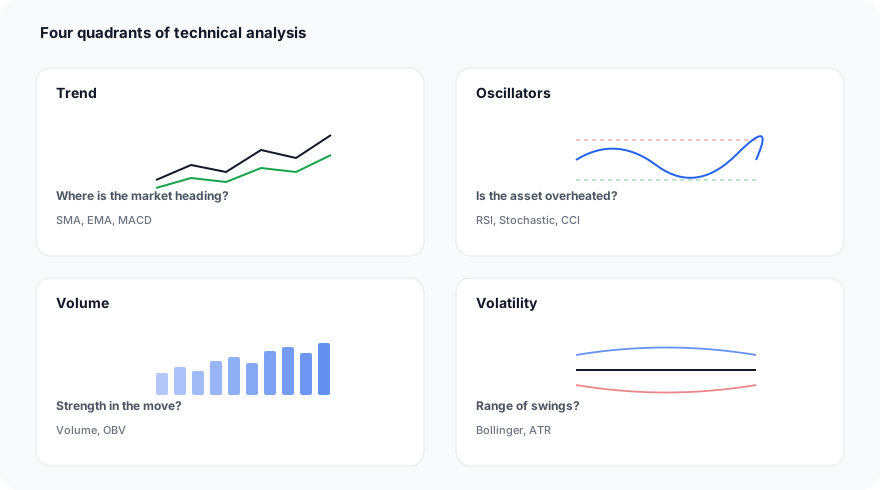
Each indicator group answers its own question. An effective trade is built on the confluence of independent signals from different quadrants.
Trend-following — where is the market heading?
Tools: SMA, EMA, MACD. Show direction and strength of the trend.
Oscillators — is the asset overheated?
Tools: RSI, Stochastic, CCI. Identify overbought and oversold zones, especially in sideways markets.
Volume — is there strength in the move?
Tools: Volume, OBV. Confirm or refute the significance of a price impulse.
Volatility — what is the range of swings?
Tools: Bollinger Bands, ATR. Help set stops and assess movement potential.
Example: signal confluence
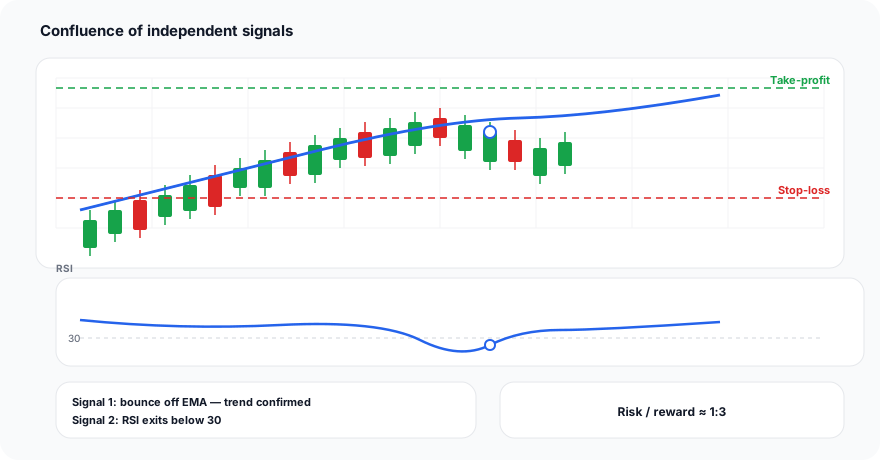
A classic long entry combination:
- Signal 1 (trend): price bounces off a rising EMA — trend confirmed.
- Signal 2 (oscillator): RSI exits below 30 — asset oversold, ready to rise.
- Protection: clear take-profit and stop-loss lines; risk/reward ratio at least 1:2 or 1:3.
Trade only when both independent signals align and risk is calculated in advance.
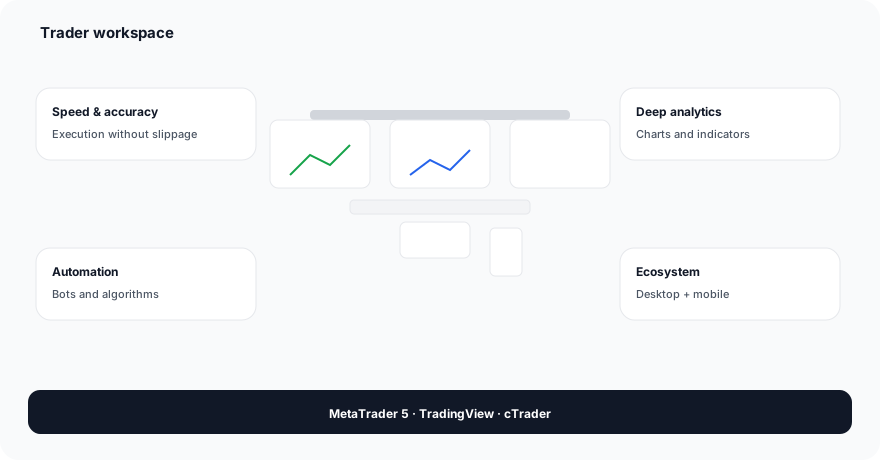
Trader workspace
The platform must provide instant response and not interfere with strategy execution.
- Speed and accuracy — order execution without slippage.
- Automation — support for trading bots and algorithms.
- Deep analytics — customizable charts, dozens of timeframes and indicators.
- Ecosystem — sync between desktop and mobile app.
Common terminal standards include MetaTrader 5, TradingView, cTrader, and professional solutions for local markets.
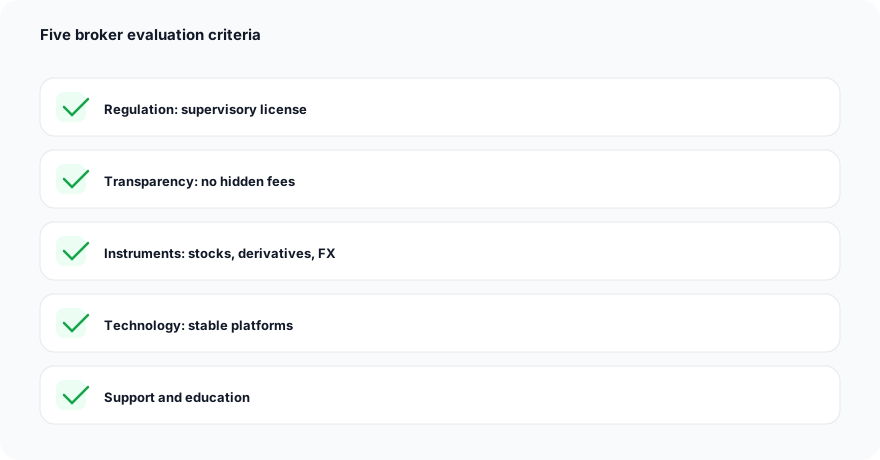
How to evaluate a broker: five criteria
- Regulation. License from a supervisory authority in your jurisdiction.
- Transparent terms. No hidden fees, clear spreads and tariffs.
- Instrument breadth. Access to stocks, derivatives, currency, and funds from one account.
- Technology. Stable platforms and fast execution servers.
- Support. Prompt help during outages and a quality educational base.
Conclusion: integrating the system into infrastructure
A personal trading system only works together with reliable infrastructure: a licensed broker, clear commissions, a stable terminal, and disciplined risk management. Start with a demo account, backtest your strategy, and only then move to live trades with minimal risk per operation.
Disclaimer
This material is for educational purposes only and is not investment advice. Trading financial markets involves the risk of capital loss.